
Chemical Polishing: The Key to Stable AI Liquid-Cooling Components
Key Takeaways
AI-server liquid-cooling components demand far higher surface cleanliness and corrosion resistance than standard parts. MAPT applies mature chemical polishing before passivation to help cooling tubes, manifolds, and fittings reach superior performance.
Rising Demand for AI Liquid-Cooling Components
With the AI boom, demand for stainless-steel tubes, manifolds, fittings, and other metal liquid-cooling components for high-end server cooling is strong. MAPT has extended its expertise into surface treatment for liquid-cooling parts — helping high-end customers achieve corrosion resistance beyond what standard passivation alone can deliver, and offering an excellent answer to their higher surface-treatment requirements.
Beyond Standard Passivation: When Chemical Polishing Is Needed
For products with ordinary corrosion-resistance needs, passivation is generally sufficient. But for semiconductor components, liquid-cooling systems, and environments with strict cleanliness requirements — where surface roughness, particle residue, or contamination risk must be considered — chemical polishing as a pre-treatment before passivation delivers compounded protection. These applications cannot tolerate tooling marks, oxidation tint, burrs, dirt, or corrosion; without proper surface treatment, risks such as surface oxidation and anomalies may develop that are hard to detect with the naked eye.
MAPT’s Chemical Polishing Advantages
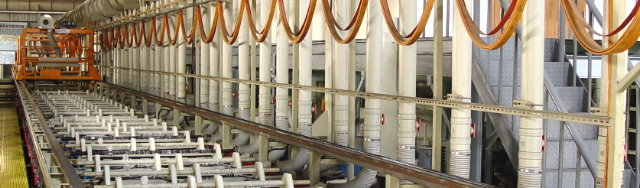
MAPT’s mature chemical polishing surpasses industry peers, producing an exceptionally smooth, clean finish while reducing contaminant residue and boosting corrosion resistance for more stable product quality. The process works by preferentially dissolving raised areas of the material surface in a chemical medium, leaving the workpiece smooth once the reaction completes. It requires no electrical contact and can polish multiple complex-shaped parts simultaneously — efficient, corrosion-resistant, and beautiful, keeping the installed system running stably over the long term. MAPT’s team can also help customers assess whether additional sealing is needed for their application environment and quality requirements, controlling cost while achieving the best quality.
FAQ
- Chemical polishing smooths the surface by preferentially dissolving peaks in a chemical bath, with no electric current or fixtures, so many complex-shaped parts can be processed together and tube interiors and recesses are polished evenly. Electropolishing requires current and conductive fixtures and is limited on complex internal cavities. For cooling tubes, manifolds and fittings, chemical polishing is usually the more efficient choice.
- Stainless-steel cooling tubes, manifolds, quick-connect fittings and cold-plate channels used in AI servers or semiconductor equipment benefit from chemical polishing before passivation when machining marks, heat tint, burrs or particle residue are not acceptable. Parts with ordinary corrosion requirements are fine with standard passivation.
- Not necessarily. Whether additional sealing is worthwhile depends on the operating environment, the coolant used and the customer's quality requirements. MAPT's team analyses the service conditions and advises whether sealing after passivation adds value, balancing cost against corrosion resistance and long-term stability.